
Home > Blog > Microdosing > Why pre-colonised mycelium makes grow kits easier to use
Why pre-colonised mycelium makes grow kits easier to use
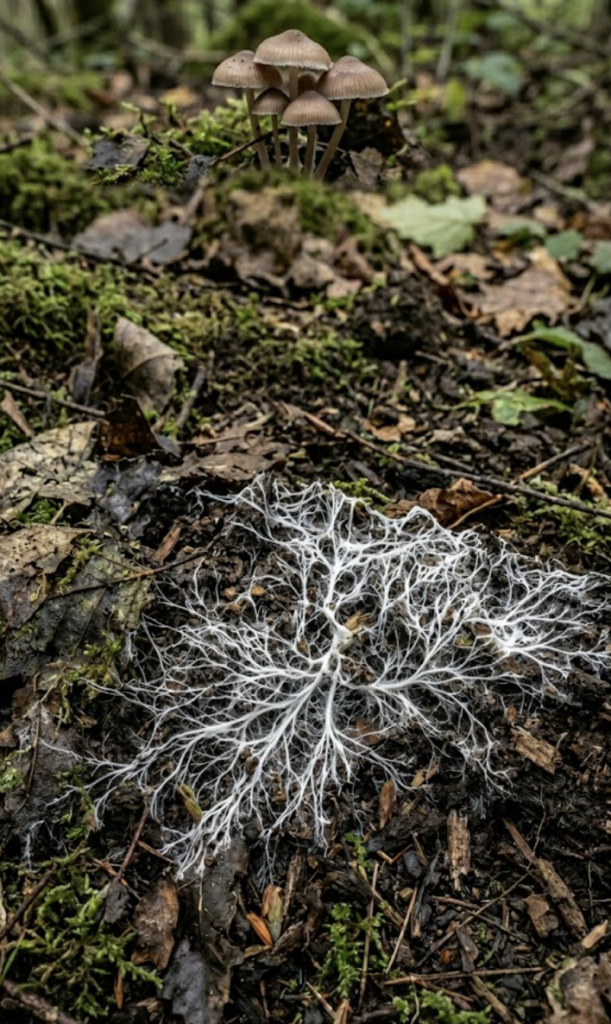
Every mushroom begins its life as mycelium. This stage happens before mushrooms become visible. In modern grow kits, this stage has already been completed before the kit reaches the user. Different types of grow kits exist depending on their intended use, but they all rely on the same biological foundation. This is one of the main reasons grow kits have made mushroom cultivation much more accessible. To understand why this matters, it helps to first understand what mycelium is and why it plays such an important role in the growth cycle of mushrooms.
The blog in 1 minute
Pre-colonised mycelium, the root-like network of a fungus, makes modern mushroom grow kits easier to use by completing the sensitive colonisation stage before the user receives the kit. Colonisation is crucial because it allows the mycelium to establish a strong network in the substrate, which absorbs nutrients efficiently and competes against contaminating microorganisms. By preparing this stage in advance, grow kits simplify the cultivation process for users, lower the barrier to entry, and increase the reliability and consistency of mushroom growth.What is mycelium?
Mycelium is the root-like network of a fungus.¹ Before mushrooms appear above the surface, this network spreads through the growing material, which is called the substrate. The mycelium absorbs nutrients from the substrate and prepares the conditions for mushrooms to grow, making it the foundation of the entire life cycle.
If this network does not develop properly, mushrooms may not grow consistently. For this reason, the early development stage of mycelium is considered one of the most important steps in mushroom cultivation.³
Why colonisation is so important
Colonisation is the stage where mycelium spreads through the substrate and takes control of the growing environment. During this phase, it competes with bacteria and other microorganisms that may also be present.
If unwanted microorganisms grow faster than the mycelium, the substrate can become contaminated. This is why the early stage of mushroom cultivation requires careful preparation and clean conditions. Pre-colonised grow kits solve much of this challenge, because the mycelium has already formed a stable network before use.³
The advantage of a prepared substrate
When mycelium fully colonises the substrate, it creates a strong and connected network that can absorb nutrients efficiently.¹ This network supports the development of mushrooms over multiple growth cycles and allows users to start at a later stage of the process. Instead of working with spores or early inoculation, the focus shifts to maintaining the right environmental conditions. This makes the process more manageable while still relying on the same biological principles.⁴
From mycelium to mushrooms
Mushrooms appear when the mycelium receives signals from the environment. Changes in humidity, light and airflow can trigger the fungus to start producing fruiting bodies.⁴ A strong mycelial network makes this stage more reliable and increases the chance of consistent growth. This is also why many grow kits can produce several flushes. After the first harvest, the mycelium may continue using remaining nutrients to produce new mushrooms.⁶
Why pre-colonised mycelium matters in grow kits
The popularity of grow kits is largely connected to reliability and simplicity. By preparing the colonisation stage in advance, the cultivation process becomes easier to manage while reducing early-stage risks. Clean conditions and stable environmental factors still play an important role, but the most sensitive phase has already been completed before the user starts.³
What grow kits make possible
Because the substrate is already colonised, grow kits allow people to grow mushrooms without laboratory equipment or sterile spore handling. This lowers the barrier to entry and makes the process easier to follow. Many people find it interesting to observe how the mycelial network develops into visible mushrooms over time, offering a more direct understanding of how fungi grow.
Different types of grow kits and what they mean
Not all grow kits are the same. While the underlying principle of pre-colonised mycelium remains consistent, different mushroom strains and kit types can be used for different purposes. Some grow kits are used for culinary or educational purposes, while others are explored in more specialised contexts. This distinction helps explain why certain strains behave differently and why users may choose one type of grow kit over another.
These differences are not just biological, but also practical. Each strain can offer a slightly different growing experience, depending on how forgiving it is, how quickly it develops and how it responds to environmental conditions:
- Golden Teacher grow kit: a balanced and forgiving option that performs well under a variety of conditions. This makes it a suitable choice for beginners who want a stable and predictable growing process.
- Colombian grow kit: known for its steady and resilient growth pattern. This strain is often chosen by users who want a reliable kit that requires minimal adjustments during the process.
- Thai grow kit: develops relatively quickly, which can shorten the time to first results. This also means that environmental factors such as humidity and temperature need to be monitored more closely.
- Mexican grow kit: an accessible option with a smooth colonisation process. This type is often selected by users who want to observe the full development cycle in a clear and gradual way.
Does mushroom strain affect mycelium behaviour?
Although different mushroom strains have unique characteristics, the fundamental behaviour of mycelium remains largely similar. In all cases, the network spreads through the substrate, absorbs nutrients and prepares for fruiting. However, small differences can occur in growth speed, environmental sensitivity and yield patterns. This means that while the cultivation process stays consistent, certain strains may respond slightly differently to conditions such as temperature or humidity.
Preparation quality and reliability
Not all grow kits are prepared in the same way. The quality of colonisation can vary significantly depending on several key factors:
- Substrate composition: the materials used in the substrate directly impact how well the mycelium can grow. High-quality substrates allow for better nutrient absorption and create a more stable environment for mycelium colonisation.
- Sterile preparation: ensuring that the substrate and environment are kept sterile is crucial to avoid contamination. A clean preparation process reduces the risk of harmful microorganisms outcompeting the mycelium during the early stages of growth.
- Strength of the mycelial network: A strong and well-developed mycelial network ensures that the substrate is fully colonised, making it easier for mushrooms to fruit. Weak or unevenly distributed mycelium can lead to inconsistent results.
Other ways people explore fungi
While grow kits focus on cultivation, fungi are also explored in other ways depending on the intended use. Some people are interested in the cultivation process itself, while others look at how specific mushroom species are used in different contexts. For example, certain grow kits are designed for specific types of mushrooms, each with their own characteristics and applications.
In addition to cultivation, there are also mushroom-based products that are used for entirely different purposes. An example is Lion’s Mane capsules, which are commonly associated with cognitive support rather than cultivation. This shows how fungi can be approached from multiple angles, depending on what someone is looking for.
A more structured way to cultivate mushrooms
The rise of grow kits reflects a broader shift toward structured cultivation systems instead of improvised setups. Pre-colonised grow kits do not bypass biology, but support the most vulnerable stage of mushroom growth by protecting it during preparation. Understanding the role of mycelium helps explain why these kits have become a central part of modern mushroom cultivation.
FAQ
Sources
- https://www.britannica.com/science/mycelium
- https://extension.psu.edu/spawning-to-casing-in-commercial-mushroom-production
- https://mycosphere.org/pdf/MYCOSPHERE_16_1_22-1.pdf
- https://link.springer.com/article/10.1007/s002530000396
- https://www.sciencedirect.com/science/article/abs/pii/S1340354094711529
- https://journals.plos.org/plosone/article?id=10.1371/journal.pone.0270633
- https://nap.nationalacademies.org/catalog/25303/reproducibility-and-replicability-in-science

About Jim
I am a founder with three+ years of experience in the smartshop and functional mushrooms space. Through Primal Focus I help people explore natural products in a safe, transparent and accessible way. My work combines personal experience with up to date knowledge from science and community insights to make information clear, reliable and easy to understand.
Expertise Psychedelics, microdosing, macrodosing, functional mushrooms and practical experience in consumer education and product safety.